
Should You Be Taking Olive Oil Shots?
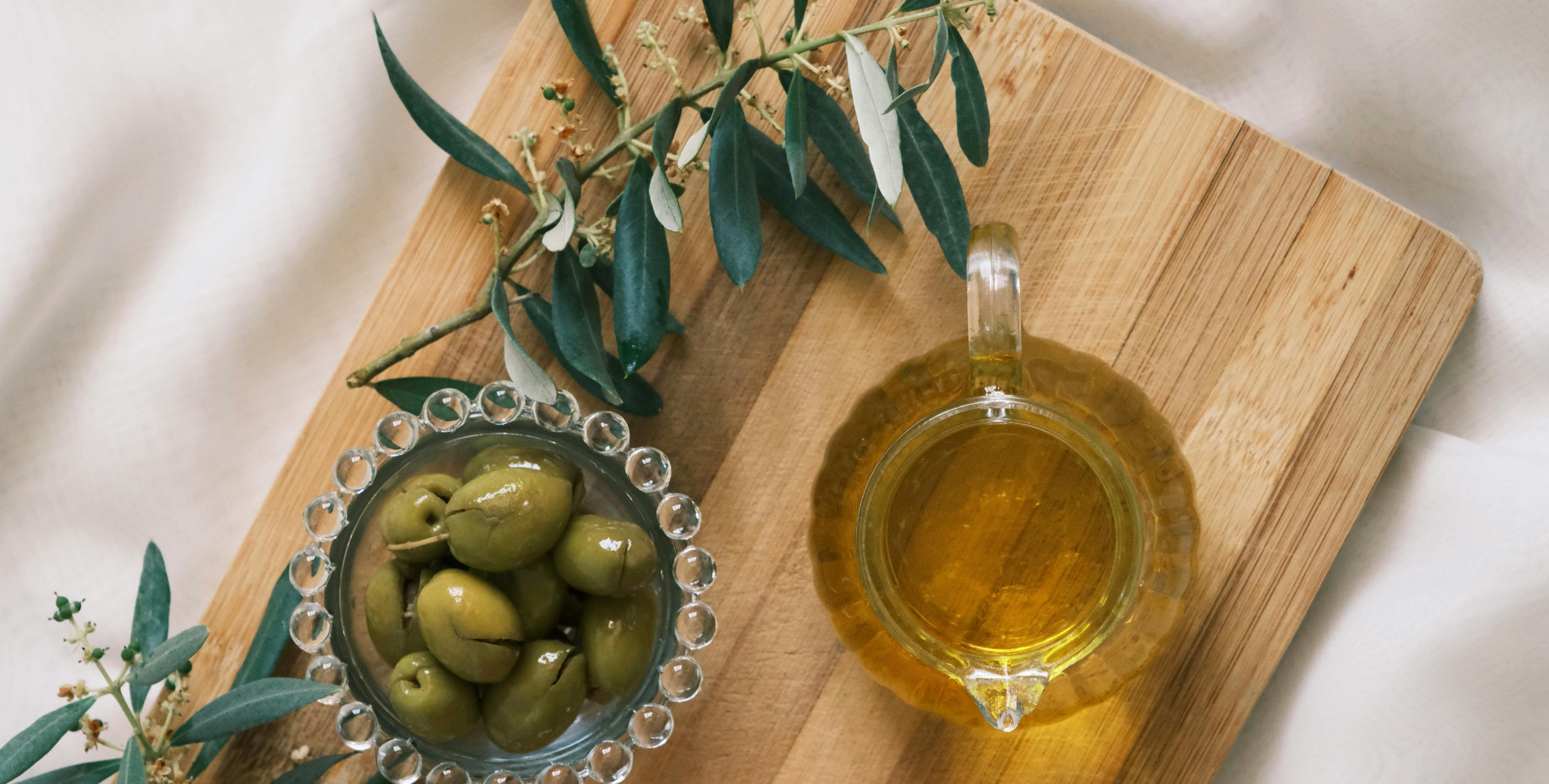
Over the last couple of years, “olive oil shots” have gained traction across social media, often promoted as a quick way to support gut health, reduce inflammation or even “heal” the body. But where has this idea come from, and does it hold up scientifically?
Where did the olive oil “shot” trend come from?
The trend appears to be a simplified interpretation of well-established research on the Mediterranean diet. This dietary pattern is consistently associated with positive health outcomes, and extra-virgin olive oil (EVOO) is a central component.
It’s important to distinguish between extra-virgin olive oil and refined olive oil. EVOO is cold-pressed and minimally processed, meaning it retains naturally occurring plant compounds known as polyphenols, alongside its monounsaturated fats. These polyphenols are thought to contribute to many of the benefits observed in research.
Refined olive oil, in contrast, undergoes processing that reduces its polyphenol content. While it remains a useful and versatile fat, particularly for higher-temperature cooking—the health associations linked to olive oil are most often attributed to EVOO specifically.
Why is olive oil considered beneficial?
Polyphenols found in EVOO are understood to act as antioxidants in the body. They may help support normal inflammatory responses and cardiovascular health when consumed regularly as part of an overall dietary pattern.
Because of this, olive oil is often highlighted as a particularly beneficial fat. However, on social media, this has been translated into the idea that consuming it in a concentrated “shot” may maximise these benefits, particularly for gut health or inflammation.
This is where the science becomes less aligned with the trend.
Does taking olive oil as a shot offer extra benefits?
The key point is that the research supporting olive oil does not examine it in isolation.
Instead, the benefits of EVOO are consistently observed when it is:
Used in cooking
Drizzled over vegetables
Added to salads, pulses and wholegrains
Consumed as part of a varied, plant-rich dietary pattern
It is this combination of healthy fats, polyphenols and plant diversity that is associated with improved health outcomes, not olive oil taken on its own, particularly on an empty stomach.
While taking a small amount of olive oil alone is not inherently harmful, there is currently limited evidence to suggest it provides additional benefits beyond consuming it as part of a balanced diet. For some individuals, it may also cause digestive discomfort or nausea when taken in this way.
Does olive oil have “healing” properties?
Olive oil is often described in very positive terms due to the strong body of evidence supporting its role within healthy dietary patterns. However, it’s important to view it as a nutritious food rather than a medicinal product.
Extra-virgin olive oil contains monounsaturated fats and polyphenols, which may support cardiovascular health and normal inflammatory processes. But these effects are seen over time, as part of an overall dietary pattern, not from single foods acting in isolation.
There is no single “superfood” that can independently deliver health outcomes. The quality and balance of the overall diet remains the most important factor.
What happens in your body when you consume olive oil?
When you consume EVOO:
The fats are digested and used as an energy source
Polyphenols act as antioxidants, helping to reduce oxidative stress
It may support normal physiological processes related to inflammation and heart health
Emerging research suggests a potential, modest role in supporting gut health
Additionally, when consumed as part of a meal, olive oil can enhance the absorption of fat-soluble vitamins, including vitamins A, D, E and K—from other foods eaten alongside it.
So, is there a better approach?
A more evidence-based approach is to return to how olive oil has traditionally been consumed for centuries.
Using extra-virgin olive oil:
Drizzled over salads
Added to roasted vegetables
Paired with beans, lentils and wholegrains
Incorporated into everyday meals
This approach allows you to benefit not only from olive oil itself, but also from the fibre, vitamins and plant diversity of the wider diet.
This reflects the Mediterranean dietary pattern, where the strongest health associations are seen.
Olive oil plays a valuable role in a healthy diet, but it doesn’t need to be taken as a shot to be effective.
Health benefits are not driven by single foods in isolation, but by consistent, balanced dietary patterns over time. When it comes to olive oil, how you use it matters just as much as how much you consume.