
Goodbye Deep-Fryers, Hello Fibre: Inside the 2026 British School Food Standards Update
Article by Kitty Costelloe
Goodbye Deep-Fryers, Hello Fibre: Inside the 2026 British School Food Standards Update
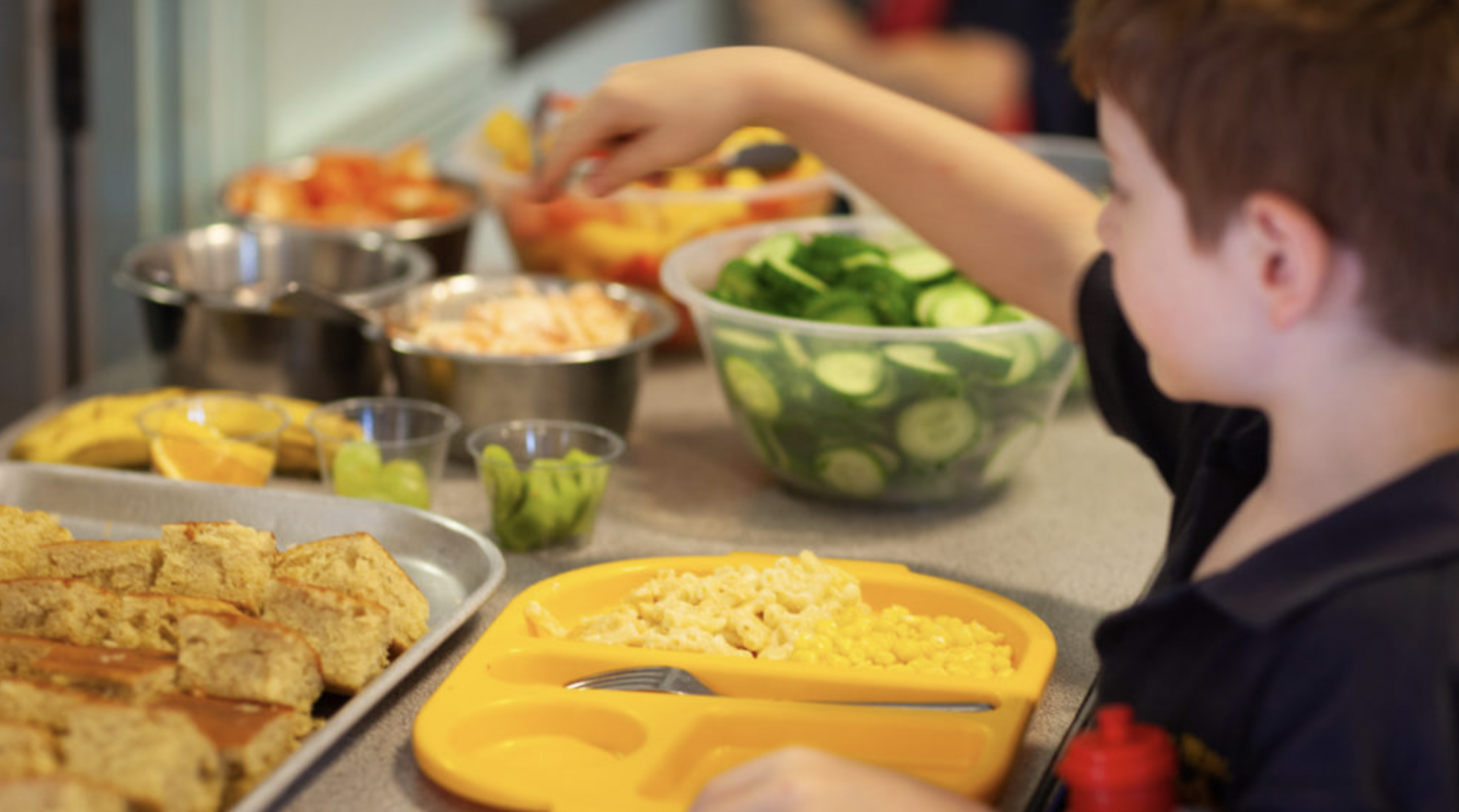
Did you know that around 30% of a child's daily food intake happens right at school? While schools have made efforts to provide nutritious meals, the 2014 School Food Standards have become outdated. To catch up with the latest nutritional science, the UK Government has just announced a massive overhaul of the rules.
Here is everything parents, teachers, and students need to know about the newly proposed 2026 guidelines.
Why Do We Need a Change?
The statistics surrounding children's diets are genuinely alarming. Currently, only 19% of children aged 5 to 15 get their recommended five-a-day, and a mere 8% meet the daily fibre recommendation.
Even more concerning, a staggering 95% of kids exceed free sugar limits, and up to 70% of calories in secondary schools come from ultra-processed foods. With over 22% of children living with obesity by the end of primary school, action is desperately needed to turn the tide on child health.
The Changes Coming to the Canteen
The new guidelines are designed to slash sugar, fat, and salt while significantly boosting fibre. Here are the major shake-ups you can expect:
Dedicated Breakfast Rules: For the first time, breakfast clubs have their own specific standards. Schools must ban pastries, fried breads, and processed meats in the morning. Instead, menus will feature cereals with less than 5g of sugar per 100g, high-fibre breads, and eggs.
A Major Push for Fibre: White carbs are taking a backseat. At least 50% of the rice and pasta served must be brown or wholewheat, and all bread must be a source of fibre (at least 3g/100g). Plus, pulses like lentils and chickpeas must be on the menu at least once a week.
Veggies with Every Meal: Every single main meal, even "grab and go" options, must come with a portion of vegetables or salad. Primary schools will also have a mandatory fruit-only dessert day at least once a week.
A War on Sugar and Sweeteners: Say goodbye to fruit juices and combination drinks, which are being completely eliminated. Primary schools are now strictly limited to plain water, plain milk, and unsweetened fortified plant-based milks, with secondary schools phasing in this rule by 2028. Furthermore, all non-sugar sweeteners are completely banned from school foods, and sweet desserts will be slashed to just one portion a week.
Slashing Fat and Salt: The deep-fat fryer is officially banned for food preparation. There are new, strict limits on processed meats, battered foods, and cheese. Snacks outside of meal times are restricted to healthier options like fruit, veg, and plain breadsticks, and condiments are strictly portion-controlled.
Healthier Meal Deals: If students grab a meal deal, it must include a vegetable or salad, a fruit, and it cannot include a drink.
A Sneak Peek at the Menu: What Does a Typical Monday Look Like?
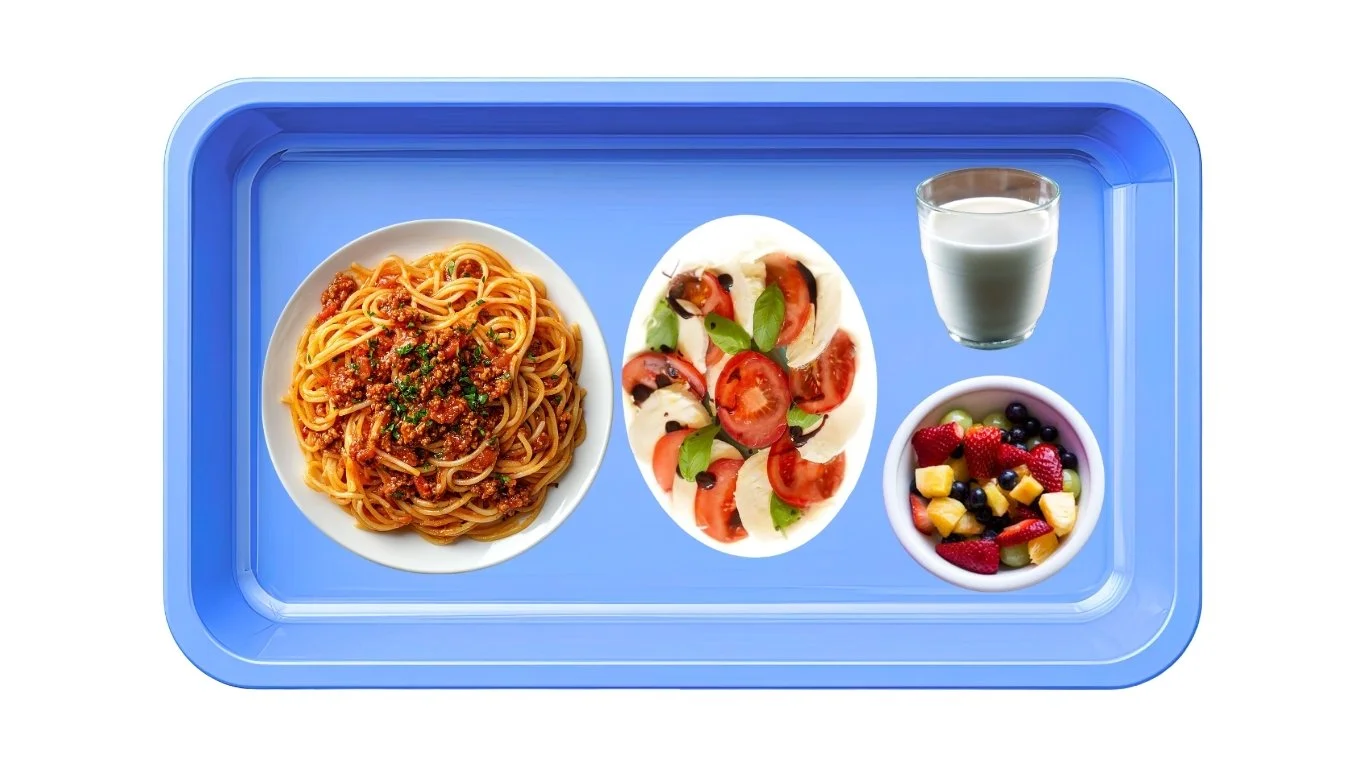
Wondering how this will look on the plate? A theoretical 2028 model menu designed for secondary schools shows exactly how catering providers plan to meet these standards. Let’s break down a sample Monday to see the changes in action:
Plated Meals Packed with Pulses: Traditional favourites are still there but upgraded! Students can choose from spaghetti bolognese (served with a fresh tomato and mozzarella salad) or a chicken and houmous wrap. Vegetarians have great options like saag paneer with pilau rice (which counts as the first of only two allowed cheese-based meals for the week) or a roasted chickpea, vegetable, sundried tomato, and mozzarella wrap. One change we’re celebrating at Rhitrition, is that every single menu item served on Monday, including grab and go, incorporates a portion of pulses!
Smarter Grab and Go: For teens in a rush, the classic "grab and go" options remain, but with a healthy twist. The pasta and sauce option is now made strictly using wholewheat pasta, alongside baked potatoes with fillings or classic sandwiches and baguettes.
Fresh Sides & Desserts: Every day features fresh seasonal salads and vegetables. Instead of sugary puddings, Monday’s dessert is a vibrant tropical fruit salad, strawberries, grapes, and fresh yoghurts.
Hydration Station: School meals are now paired with fresh drinking water, plain milk, fortified plain plant drinks (like oat or soya), or even tea and coffee, provided there are no added syrups or cream. Sugar-free flavoured waters and fruit-flavoured drinks with less than 0.5g of sugar per 100ml are also permitted.
Who is Keeping Track?
To make sure these changes actually happen, the rules around accountability are getting stricter. Schools must now publish their food policies and menus online, and they are required to appoint a lead governor specifically responsible for school food compliance. Nurseries are also seeing a shift, as they will now strictly follow the Early Years Foundation Stage (EYFS) nutrition guidance.
When Does This All Happen?
The consultation period for these new standards opened on the 13th of April and runs until the 12th of June, 2026.
Once finalised, primary schools are expected to implement the new rules by September 2027. Secondary schools, which rely heavily on a "grab and go" food culture, will have an extra year—until September 2028—to fully phase in the stricter rules around drinks, desserts, and cheese.
References
NHS Digital. Health Survey for England, 2022 Part 1 [Internet]. NHS England Digital. 2024. Available from: https://digital.nhs.uk/data-and-information/publications/statistical/health-survey-for-england/2022-part-1/childrens-health-and-health-related-behaviours
2. Roberts C, Jones K, Page P. National Diet and Nutrition Survey 2019 to 2023: Report. Office for Health Improvement & Disparities. 2025 Jun 11;65(S1):S92–101.
Foundation F. Children’s Right2Food Dashboard | Food Foundation [Internet]. foodfoundation.org.uk. Available from: https://foodfoundation.org.uk/childrens-right2food-dashboard#tabs/What-Children-Eat
Woodside JV, Adamson A, Spence S, Baker T, McKinley MC, GENIUS (Generating Excellent Nutrition In UK Schools) network. Opportunities for intervention and innovation in school food within UK schools. Public Health Nutrition [Internet]. 2020 Nov 17;24(8):1–5. Available from: https://pubmed.ncbi.nlm.nih.gov/33198839/
Harrison F, Jennings A, Jones A, Welch A, van Sluijs E, Griffin S, et al. Food and drink consumption at school lunchtime: the impact of lunch type and contribution to overall intake in British 9–10-year-old children. Public Health Nutrition. 2011 Sep 22;16(6):1132–9.
Parliament. House of Lords - Recipe for health: a plan to fix our broken food system - Food, Diet and Obesity Committee [Internet]. Parliament.uk. 2022 [cited 2026 Mar 26]. Available from: https://publications.parliament.uk/pa/ld5901/ldselect/ldmfdo/19/1910.htm#footnote-161
School Food Matters. School food facts [Internet]. School Food Matters. Available from: https://www.schoolfoodmatters.org/news-views/school-food-facts
British Nutrition Foundation. National Pupil Survey 2014: UK Survey Results [Internet]. www.justvitamins.com. 2014. Available from: https://www.justvitamins.co.uk/Uploaded/1/Documents/Blog/698_UK%20Pupil%20Survey%20Results%202014.pdf
Public Health England. NDNS: results from years 9 to 11 (2016 to 2017 and 2018 to 2019) [Internet]. GOV.UK. 2020. Available from: https://www.gov.uk/government/statistics/ndns-results-from-years-9-to-11-2016-to-2017-and-2018-to-2019
Department for Education. School Food Standards: updating the legislative framework - Department for Education - Citizen Space [Internet]. Education.gov.uk. 2026 [cited 2026 Apr 13]. Available from: https://consult.education.gov.uk/school-food-policy-team/school-food-standards-updating-the-leg-framework/
This blog post was written by Kitty Costelloe, a Clinical Nutrition and Eating Disorders MSc student at University College London.