
Complete Guide to Magnesium

Article by Aoibhinn Connolly
What is magnesium?
Magnesium is an essential mineral involved in more than 300 enzymatic reactions in the body. It plays an important role in supporting normal muscle and nerve function, energy metabolism, protein synthesis, electrolyte balance and the maintenance of healthy bones and teeth.
Although magnesium is found naturally in a wide range of foods, dietary intake can vary depending on food choices and the degree of food processing.
What does magnesium do?
Magnesium contributes to several important physiological functions, including:
Normal muscle function
Normal functioning of the nervous system
Normal energy-yielding metabolism
Normal protein synthesis
Maintenance of normal bones and teeth
Reduction of tiredness and fatigue
Normal psychological function
Maintenance of electrolyte balance
Recommended intake (UK)
The UK Reference Nutrient Intake (RNI) for magnesium is:
Magnesium (mg/day)Men (19 years and over)300 mgWomen (19 years and over)270 mg
There is currently no separate UK recommendation for pregnancy or breastfeeding, although requirements may differ between individuals.
Food sources of magnesium
Magnesium is naturally present in a wide variety of foods. Good dietary sources include:
Green leafy vegetables, such as spinach
Nuts, including almonds and cashews
Seeds, particularly pumpkin and chia seeds
Pulses, including beans, lentils and chickpeas
Wholegrains, such as oats and wholemeal bread
Tofu and other soya products
Avocado
Cocoa and dark chocolate
Including a variety of these foods regularly can help support adequate magnesium intake.
Do I need a magnesium supplement?
For most healthy adults, magnesium requirements can be met through a varied and balanced diet, and routine supplementation is not recommended.
Magnesium supplements may be appropriate in certain circumstances, such as when dietary intake is inadequate or where deficiency has been identified. However, supplementation should be based on individual need and, where appropriate, discussed with a healthcare professional.
Although magnesium supplements are widely marketed for sleep, muscle cramps and stress, the evidence supporting their use for these purposes in the general population remains limited and inconsistent. More research is needed before routine supplementation can be recommended for these indications.
Can cooking affect magnesium content?
Some magnesium can be lost during food preparation, particularly when vegetables are boiled, as the mineral can leach into the cooking water. Steaming, microwaving and roasting generally retain more magnesium than prolonged boiling.
However, the overall nutritional quality of the diet is far more important than small losses during cooking. Regularly including magnesium-rich foods remains the most effective way to support adequate intake.
Top dietary sources of magnesium
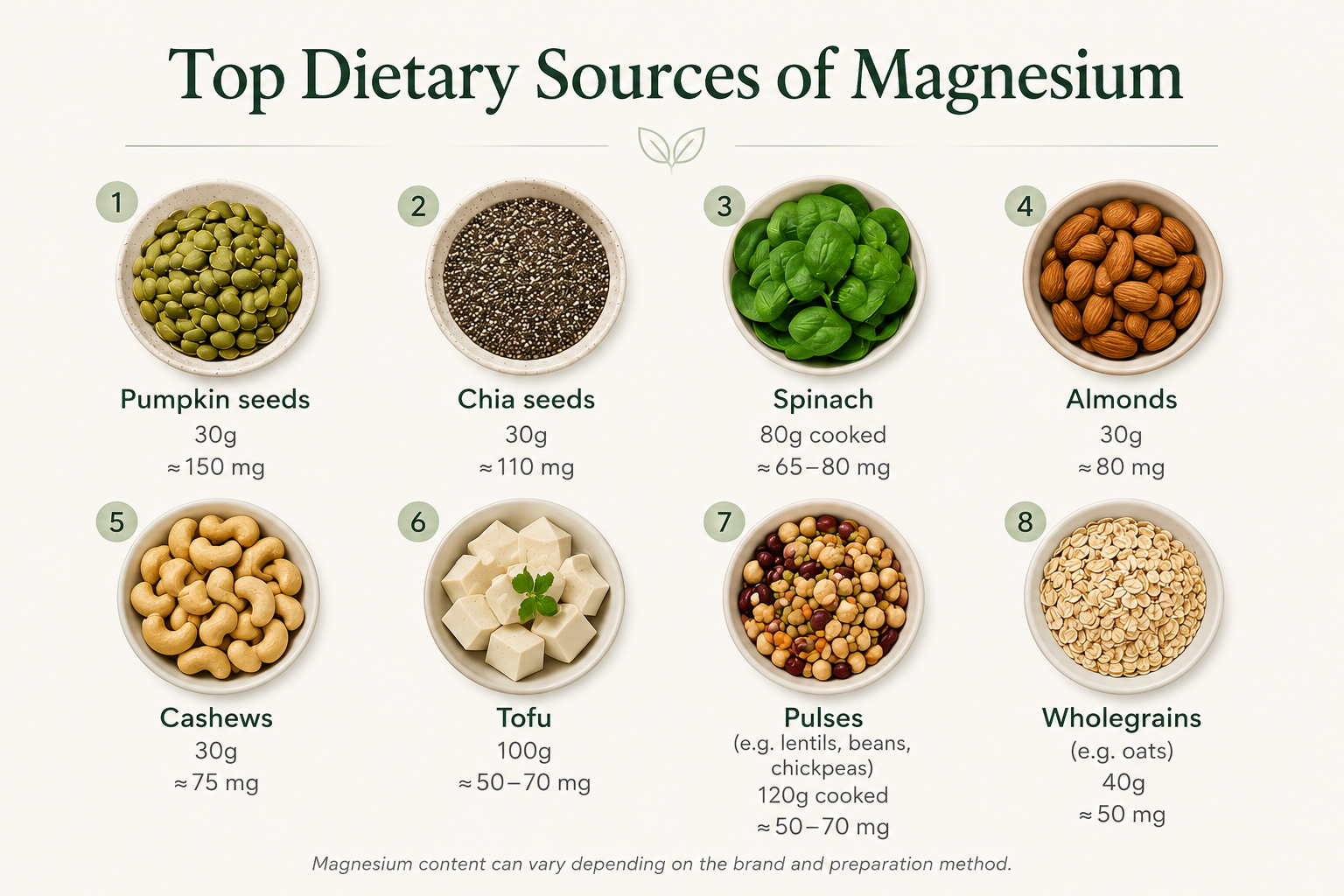
*Varies according to the type of coagulant used during production.